
Sekelbos
Dichrostachys cinerea — Lowveld / Namibian
Burns (approx./Drop)
~3–4 hours
Moisture
10–15%
From
R110/Drop
Why choose Sekelbos Firewood?
A dense Namibian braai wood with an aromatic edge. Excellent long-lasting coals and a subtle smoky flavour — a favourite for braais and outdoor fires.
About Sekelbos
Sekelbos (Sicklebush) is sourced from the Lowveld and Namibia. Dried to 10–15% moisture, it burns cleanly and reliably — a solid choice for outdoor applications.
What sets Sekelbos apart is its subtle natural aroma. A pleasant earthy, slightly smoky character that complements braai meat beautifully without overpowering it. Excellent long-lasting coals with a great burn time of 3–4 hours.
Equally at home on a braai stand or in an open fireplace — an excellent choice if you want authentic South African braai character.
Sourced fromNamibia
Sourced from Sicklebush (Dichrostachys cinerea) stands in the Lowveld and Namibia, air-dried before shipping south to Cape Town.
Best for
- Traditional braai
- Open fireplaces
- Aromatic cooking fires
When not to choose Sekelbos
- Closed-combustion stoves (aromatic smoke — use Blue Gum for closed units)
WoodDrop tip
Sekelbos pairs beautifully with boerewors. The subtle aroma complements the spice without overpowering it.
How much Sekelbos do I need?
Sekelbos goes approximately four to six braai sessions per Drop (≈ 18 kg) for a standard grill. One Drop sustains a full evening fire in an open fireplace three to four times. For a braai season of ten to twelve sessions, plan on two to three Drops. Sekelbos burns longer than Rooikrans, so it goes further per Drop than lighter braai woods.
How long does Sekelbos burn?
Sekelbos burns for three to four hours per Drop — a solid, reliable mid-premium burn time. The density of 970 kg/m³ is between Kameeldoring and Blue Gum, producing a solid coal bed after peak flame. The 3–4 hour window makes Sekelbos practical for a full afternoon braai session, and it lights more readily than Kameeldoring.
Sekelbos vs Kameeldoring
Sekelbos and Kameeldoring are both premium braai hardwoods at R110/Drop. Kameeldoring at 1 100 kg/m³ burns longer (4–5 hours) and produces virtually no aroma. Sekelbos at 970 kg/m³ burns for 3–4 hours with a subtle, earthy aromatic character that many braai cooks consider an advantage. Sekelbos lights faster than Kameeldoring. For aromatic braai character with long coals choose Sekelbos; for maximum duration choose Kameeldoring.
How to light Sekelbos
Sekelbos lights more readily than Kameeldoring but still benefits from a firelighter cube and kindling. Place the firelighter at the base, stack kindling in a tent, add two to three pieces of Sekelbos, and allow time for the fire to establish before cooking. Sekelbos catches faster than Kameeldoring due to its slightly lower density.
Storing Sekelbos in Cape Town
Sekelbos is sourced from the Lowveld and Namibia and arrives at 10–15% moisture. In Cape Town's wetter winter conditions, store Sekelbos covered on top with sides open on a raised rack. Sekelbos is less dense than Kameeldoring and therefore absorbs ambient humidity slightly faster, so covering the stack during winter rain is particularly important. Dry storage maintains the coal quality and aromatic character.
Common questions about Sekelbos
What does Sekelbos smell like when burning?
Sekelbos (Sicklebush, Dichrostachys cinerea) has a subtle earthy, slightly sweet aromatic character when burning. Most braai cooks describe it as complementary to meat — particularly boerewors, lamb chops, and beef — without being overpowering. The aroma is more noticeable than Kameeldoring (which burns almost odourlessly) and less intense than Vine, which has a distinct sweet character.
Is Sekelbos suitable for an open fireplace?
Sekelbos works well in open fireplaces. The open flue handles the mild aromatic smoke, and the 3–4 hour burn produces a long, steady fire for a winter evening. It is not recommended for closed combustion stoves — the aromatic smoke compounds can deposit on sealed stove glass and internal components over time. For closed combustion, choose Blue Gum or Mopane.
Where does Sekelbos come from?
Sekelbos (Dichrostachys cinerea), also called Sicklebush, grows across the Lowveld of southern Africa, extending into parts of Namibia and Botswana. It is not plantation-grown but naturally occurring woodland. WoodDrop sources Sekelbos from managed harvesting operations in those regions. Air-dried in the Lowveld before transport to Cape Town, it arrives at 10–15% moisture.
Is Sekelbos the same as 'bushveld firewood'?
Sekelbos is one of several Lowveld hardwood species used as firewood in southern Africa. The common names overlap regionally — what is called Sicklebush in some areas is Sekelbos in others. WoodDrop's Sekelbos is specifically Dichrostachys cinerea, known for aromatic smoke and long-burning coals. Other species sold as 'bushveld firewood' may differ in density, aroma, and burn time.
You might also consider
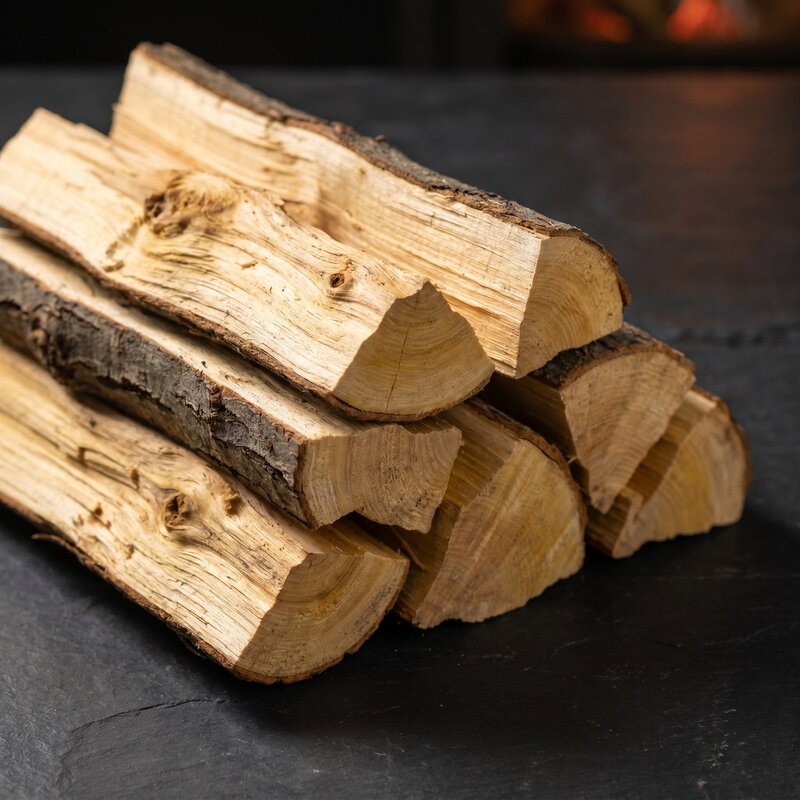
Sekelbos
Dichrostachys cinerea — Lowveld / Namibian
Other wood types
View all
Why WoodDrop
- ✅ Verified suppliers only
- ✅ Moisture-tested wood
- ✅ Money-back guarantee
- ✅ Cape Town next-day delivery