
Rooikrans
Acacia cyclops — Cape Peninsula
Burns (approx./Drop)
~1.5–2.5 hours
Moisture
under 18%
From
R89/Drop
Why choose Rooikrans Firewood?
Cape Town's classic braai wood. Burns hot with excellent long-lasting coals and a distinctive aroma. Sustainably cleared from the Cape Peninsula — every bag helps clear invasive bush.
About Rooikrans
Rooikrans (Red Garland Wattle) is an invasive alien plant cleared constantly from Cape Peninsula nature reserves. Burning it is genuinely good for the environment: you're helping fund its removal while getting excellent firewood.
Burns hot with excellent long-lasting coals and a distinctive aroma. Cape Town braai culture runs on Rooikrans for a reason.
For open fireplaces and fire pits, Rooikrans works well — the open flue or outdoor setting handles any slight smoke. We don't recommend it for closed-combustion fireplaces, where its higher moisture and smoke output can be problematic.
Sourced fromLocal / SA
Cleared from Cape Peninsula nature reserves as part of ongoing invasive alien plant removal programmes run by SANParks and conservation bodies. Every bag helps fund that work.
Best for
- Braai & BBQ
- Open fireplaces
- Fire pits
- Budget-conscious fires
- Eco-friendly choice
When not to choose Rooikrans
- Closed-combustion stoves (too smoky — use Blue Gum instead)
- All-night fires (burns faster than premium hardwood)
WoodDrop tip
Rooikrans can produce some smoke when wet — our stock is always pre-dried, but store it indoors to keep it that way.
How much Rooikrans do I need?
Rooikrans goes approximately two to three braai sessions per Drop (≈ 18 kg) for a standard grill, or three to four open fireplace sessions. For a full Cape Town braai season of ten to twelve sessions, plan on three to four Drops. Rooikrans burns faster than premium hardwoods, so experienced braai cooks keep a spare Drop ready for longer sessions.
How long does Rooikrans burn?
Rooikrans burns for one and a half to two and a half hours per Drop — the shortest of the dedicated braai woods. The density of 800 kg/m³ is similar to Black Wattle, but Rooikrans burns more intensely, producing fast, fierce heat and excellent braai coals. For a weeknight braai that starts at 6 pm and finishes by 8 pm, one Drop is the right quantity.
Rooikrans vs Sekelbos
Rooikrans at R89/Drop burns for 1.5–2.5 hours — fast and hot, great for searing. Sekelbos at R110/Drop burns for 3–4 hours with a subtle aromatic character — better for a long session. Choose Rooikrans for a quick weeknight braai; choose Sekelbos when you want lasting coals and flavour. Rooikrans is more widely available; Sekelbos is always worth having on hand for the big occasion.
How to light Rooikrans
Rooikrans lights faster than most braai woods — one firelighter cube and two to three pieces of kindling is all it takes. Stack the kindling over the firelighter, place Rooikrans pieces on top, and light. Rooikrans suits cooks who want a fire ready with minimal waiting.
Storing Rooikrans in Cape Town
Rooikrans is rated at under 18% moisture — slightly higher than the premium hardwoods but still within safe burning range. In Cape Town's wet winters, store it covered on top with the sides open. Any Rooikrans that gets rained on should be allowed to re-dry before burning — wet Rooikrans smokes noticeably more than dry. A ventilated woodshed or carport storage keeps it in best condition.
Common questions about Rooikrans
Why is Rooikrans Cape Town's most popular braai wood?
Rooikrans (Acacia cyclops) has been the go-to Cape braai wood for generations because it grows across the Cape Peninsula, costs less than premium hardwoods, lights easily, and produces hot coals with a characteristic aroma. Its sourcing story adds to the appeal: every bag comes from invasive bush clearing that benefits the fynbos.
Does Rooikrans add flavour to the food?
Rooikrans gives braai meat a distinct, slightly smoky aroma that many South Africans associate specifically with a Cape braai. The flavour is mild — present but not overpowering. It is more noticeable than Blue Gum or Kameeldoring, which burn almost odourlessly, and less pronounced than Sekelbos.
Can I use Rooikrans in an open fireplace?
Rooikrans works well for open fireplaces. The open flue or chimney handles the moderate smoke output, and Rooikrans produces a lively, warm fire. WoodDrop does not recommend Rooikrans for closed combustion stoves — its slightly higher moisture level and smoke output can be problematic in sealed units. For indoor closed units, choose Blue Gum.
Is Rooikrans clearing good for the Cape fynbos?
Yes. Rooikrans (Acacia cyclops) is a declared invasive alien in the Western Cape that suppresses fynbos and drains water from streams. Removing it is a legal requirement on agricultural and conservation land. WoodDrop sources Rooikrans from SANParks and conservation-body clearing operations, so buying it directly funds that removal work.
You might also consider
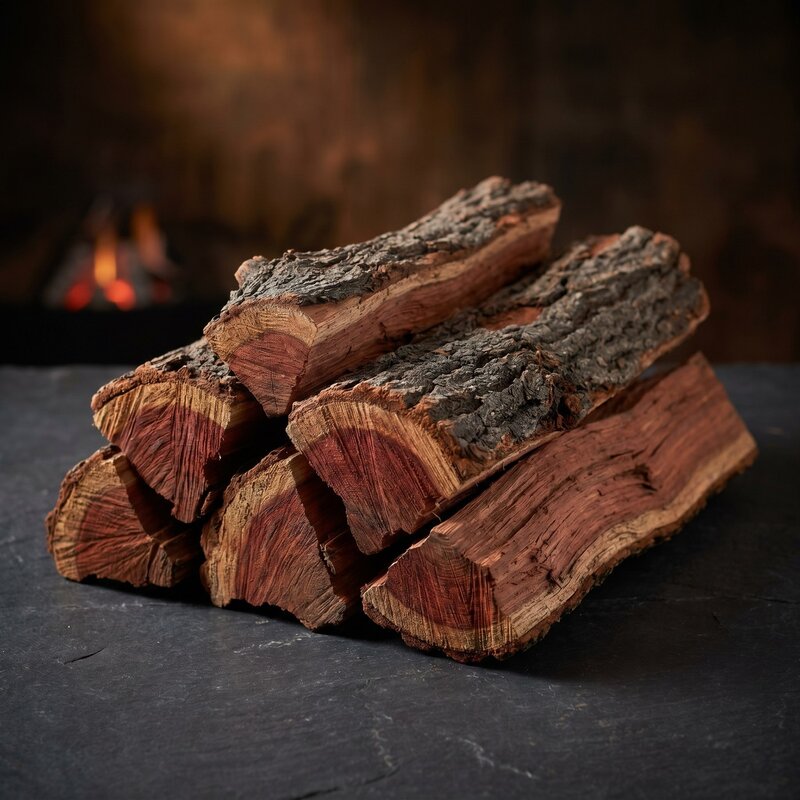
Rooikrans
Acacia cyclops — Cape Peninsula
Other wood types
View all
Why WoodDrop
- ✅ Verified suppliers only
- ✅ Moisture-tested wood
- ✅ Money-back guarantee
- ✅ Cape Town next-day delivery